A U.S. immigration interview can be one of the most important stages of the immigration process. For many applicants, it is also the stage that creates the most uncertainty.
Knowing what to expect, organizing your documents, and reviewing your application beforehand can help you arrive better prepared.
While every case is different, there are several practical steps applicants can take before attending an immigration interview.
Understand the Purpose of the Interview
The interview allows the relevant U.S. authorities to review your application, verify information, examine supporting documentation, and ask questions related to your eligibility.
The questions you receive will depend on the immigration category and your individual circumstances.
The objective should not be to memorize answers, but to understand your own application and be prepared to provide clear and accurate information.
Review Your Application Before the Interview
One of the most important preparation steps is reviewing the information previously submitted in your application.
You should be familiar with important details such as your personal information, education, employment history, family information, previous travel, addresses, and other information relevant to your case.
If circumstances have changed since the application was submitted, determine whether updated information or documentation may be required.
Organize Your Documents
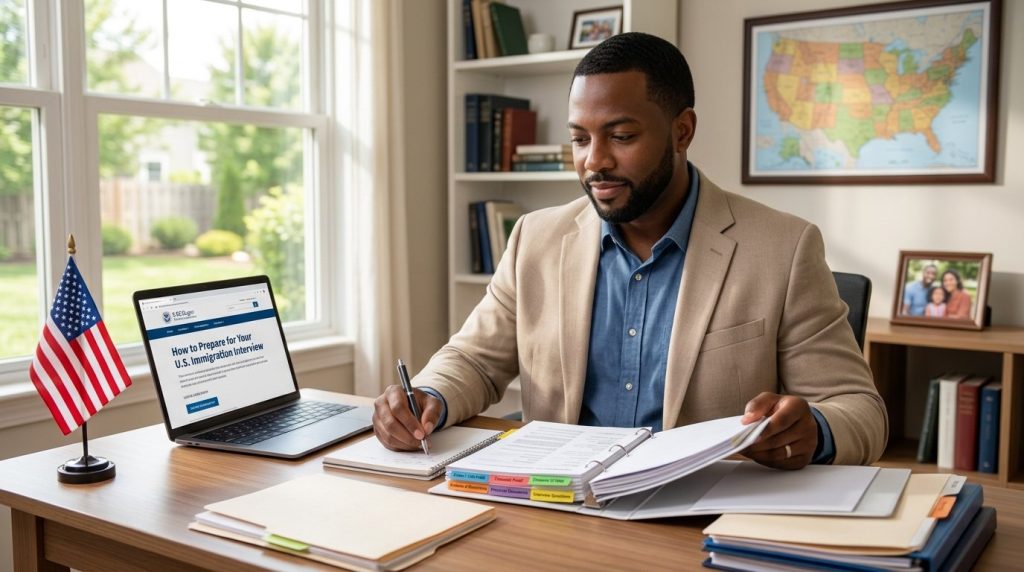
Document preparation is an essential part of interview readiness.
The documents required depend on the immigration category and the instructions applicable to the individual case.
Applicants may be required to bring original documents, supporting records, identification, photographs, financial information, educational documents, civil records, or other evidence.
Organize everything before the interview rather than waiting until the last minute.
Make Sure Your Information Is Consistent
Consistency is important throughout an immigration process.
Information provided during the interview should accurately reflect your circumstances and should be consistent with the information and documentation previously submitted.
If you do not understand a question, it is better to ask for clarification than to guess.
Be Clear and Direct
Immigration interviews are formal proceedings, but answers do not need to be unnecessarily complicated.
Listen carefully to each question and respond clearly and truthfully.
When a simple answer is sufficient, there is usually no reason to provide unrelated information.
Prepare for Questions About Your Background
Depending on the immigration category, questions may relate to areas such as:
- Your personal and family background
- Education and professional experience
- Employment history
- Previous travel
- Your immigration application
- Your plans in the United States
- Documents submitted as part of your case
The exact questions will vary from applicant to applicant.
Check the Interview Instructions Carefully
Before attending your appointment, review the official instructions associated with your interview.
Confirm the location, date and time, documents you are expected to bring, security procedures, medical examination requirements if applicable, and any other instructions provided by the relevant authority.
Requirements can differ depending on the type of application and interview location.
Avoid Memorized or Artificial Answers
Preparing for an interview does not mean learning a script.
Over-rehearsed answers can make communication more difficult and may prevent you from responding naturally to the actual question being asked.
Preparation should focus on understanding your case, reviewing your documentation, and being comfortable discussing the information you have provided.
Arrive Prepared
Allow enough time to arrive at the interview location according to the instructions provided with your appointment.
Before leaving, verify that you have the required identification, appointment information, original documents, supporting evidence, and any other materials requested for your case.
Preparation Can Make the Process Easier to Navigate
An immigration interview does not need to feel unpredictable.
Understanding your application, organizing your documentation, and knowing what to expect can help you approach the interview in a more organized way.